
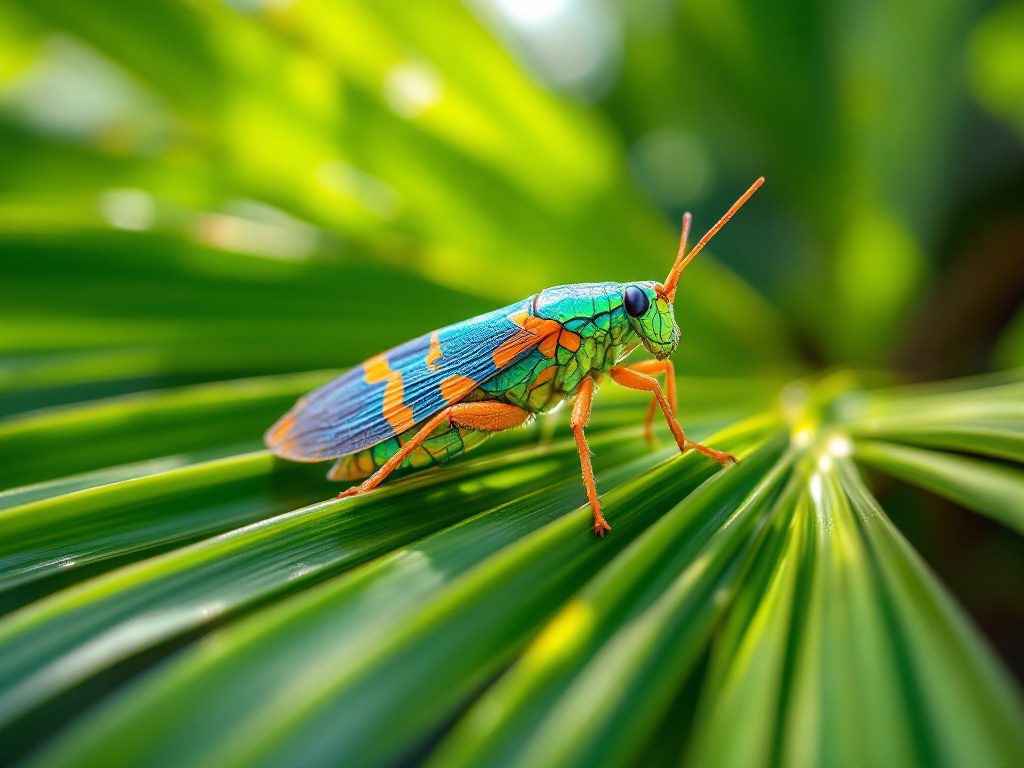
Image generated by flux-ai.io & content generated by ChatGPT Version 4o-mini
Curious Creatures: The Flatid Planthopper and Its Role in Charlotte County’s Ecosystem
In the warm, sunny climate of Charlotte County, Florida, you might have noticed some tiny creatures hopping around your palm trees. These are called Flatid planthoppers, specifically the species Ormenaria rufifascia. While they aren’t usually harmful to our gardens and landscapes, they can have some surprising effects on the plants we love.
What Are Flatid Planthoppers?
Flatid planthoppers are small insects, about the size of a dime, that are often found on the undersides of palm leaves, particularly the cabbage palmetto and saw palmetto, both of which are common in our area. They are easily recognized by their flat, sailboat-like shape and colorful markings. The adults are blue-green with bright orange patterns, making them stand out against the green leaves. Their young, or nymphs, are light green and covered in a waxy coating that helps protect them as they feed on plant juices.
Their Impact on Plants
While Flatid planthoppers are not typically considered serious pests, they can indirectly harm palms by producing a sticky substance called honeydew. This sweet excretion can lead to the growth of sooty mold, which can cover leaves and block sunlight, potentially stunting the plant’s growth. In our local botanical gardens and residential areas where palms are plentiful, a dense population of these insects might lead to aesthetic damage, making palm fronds look less appealing. It’s crucial for gardeners to regularly inspect their plants for signs of this mold, as it can indicate the presence of these insects.
A Natural Part of the Ecosystem
Interestingly, Flatid planthoppers have a role in our ecosystem, too. They are part of the food web, serving as a food source for various predators, including beneficial insects like stink bugs. While they can sometimes multiply quickly, their populations usually remain low. Most of the time, you’ll see just a few on a single frond of a palm.
Why Should We Care?
For residents of Charlotte County, understanding Flatid planthoppers is important for several reasons:
- Gardening and Landscaping: If you’re a garden enthusiast, knowing about these insects can help you take care of your plants. Regular inspections of your yard can help identify pests early, ensuring that you can take appropriate action. If you notice sticky leaves or sooty mold, it might be worth checking for these little hoppers.
- Local Agriculture: With agriculture being a significant part of our economy (especially with vegetables and citrus like oranges), keeping an eye on pests is crucial. While Flatid planthoppers don’t usually cause major problems, awareness can help prevent potential issues with crops.
- Ecosystem Awareness: Understanding how insects fit into our local ecosystem can enhance our appreciation for the environment. Every creature, even the tiny ones, plays a role in maintaining balance.
Managing Flatid Planthoppers
Fortunately, if you do find a lot of these insects on your palms, management is straightforward. You can often wash them off with a strong spray of water, which is an easy and eco-friendly solution. For most residents, these insects will not pose a threat to their gardens or homes. Additionally, you can encourage beneficial insects that naturally control pest populations, promoting a healthier garden environment.
As we continue to enjoy the beauty of our palm trees and the warm Florida sun, let’s also take a moment to appreciate the Flatid planthopper. They might be small, but they’re a fascinating part of Charlotte County’s natural landscape, reminding us of the intricate connections in our local ecosystem. Keep an eye out for these colorful critters next time you’re walking through a park or your backyard!
References
EENY351/IN643: Flatid Planthopper, Oormenaria rufifascia (Walker) (Insecta: Hemiptera: Auchenorrhyncha: Flatidae). (n.d.). Ask IFAS – Powered by EDIS. https://edis.ifas.ufl.edu/publication/IN643