
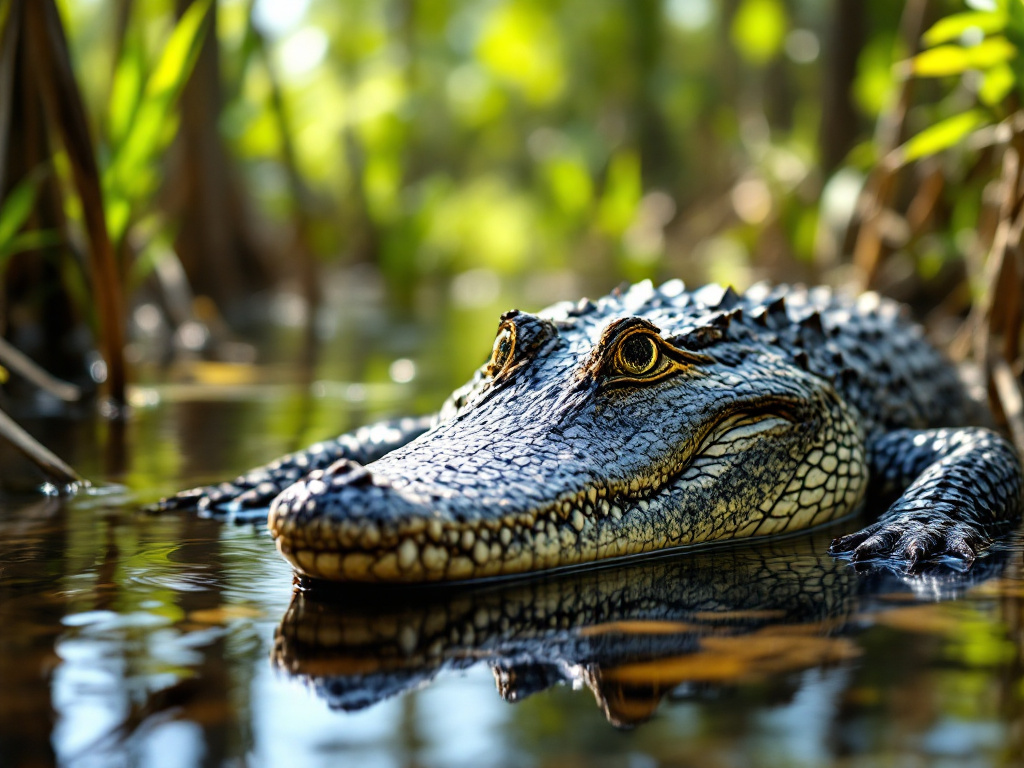
Image generated by flux-ai.io & content generated by ChatGPT Version 4o-mini
Alligators: Nature’s Report Card for Everglades Restoration
Gadsden County residents, while we may not live right next to the Everglades, the health of this iconic Florida ecosystem has a ripple effect on our environment and agriculture. A recent study highlights the importance of the American alligator in monitoring the Everglades’ restoration, and understanding this connection can help us appreciate how local ecosystems function.
The American alligator, a familiar sight in Florida, is more than just a powerful predator; it serves as an indicator species. This means that the health and population of alligators can tell scientists how well the Everglades’ ecosystem is doing. As the Everglades undergo restoration, which aims to improve water quality and habitats, the condition of alligators will reflect changes in the environment.
Why Alligators Matter
Alligators thrive in freshwater marshes and swamps, but their populations have been declining due to habitat loss from development and changes in water management. This decline is concerning because alligators play a crucial role in their ecosystem. They help maintain the health of wetlands by creating water holes that provide refuge for fish and other wildlife, especially during dry seasons.
Research indicates that alligators respond quickly to changes in their environment. For instance, if the water in the Everglades becomes too salty or too deep, alligators may struggle to survive, which can indicate larger problems in the ecosystem. Monitoring alligator populations helps scientists gauge the success of restoration efforts, making their conservation vital to the overall health of Florida’s wetlands.
How Does This Connect to Gadsden?
Though Gadsden is a few hours away from the Everglades, we share a broader ecological community. The health of Florida’s wetlands, including the Everglades, affects water quality and wildlife in our area. In Gadsden County, where agriculture plays a significant role in our economy, understanding the impacts of water management is crucial. Healthy ecosystems contribute to sustainable agriculture, which is essential for our local farmers, many of whom rely on clean water and fertile land.
As alligators begin to thrive once more, they can signal that the Everglades are healing. If restoration efforts succeed, it could lead to a healthier environment that benefits all of Florida, including Gadsden. For example, improved water quality can enhance fish populations, which are vital for both recreational fishing and local biodiversity.
What Can We Do?
Being aware of these ecological indicators can empower us as community members. Supporting local conservation efforts, practicing sustainable farming, and advocating for responsible water management can all contribute to healthier ecosystems. Educating ourselves and our youth about the importance of species like the alligator can foster a sense of stewardship for our natural resources.
The connections between the Everglades and Gadsden County may not be immediately visible, but they are there. By understanding the role of alligators in ecosystem health, we can appreciate how closely our fates are intertwined with those of Florida’s unique wildlife.
As we look to the future, let’s keep an eye on our natural surroundings and champion efforts that restore and protect them. The success of the Everglades’ restoration project might just be reflected in the thriving population of alligators—and that’s good news for all Floridians.
References
WEC313/UW358: The American Alligator: An Indicator Species for Everglades Restoration. (n.d.). Ask IFAS – Powered by EDIS. https://edis.ifas.ufl.edu/publication/UW358