
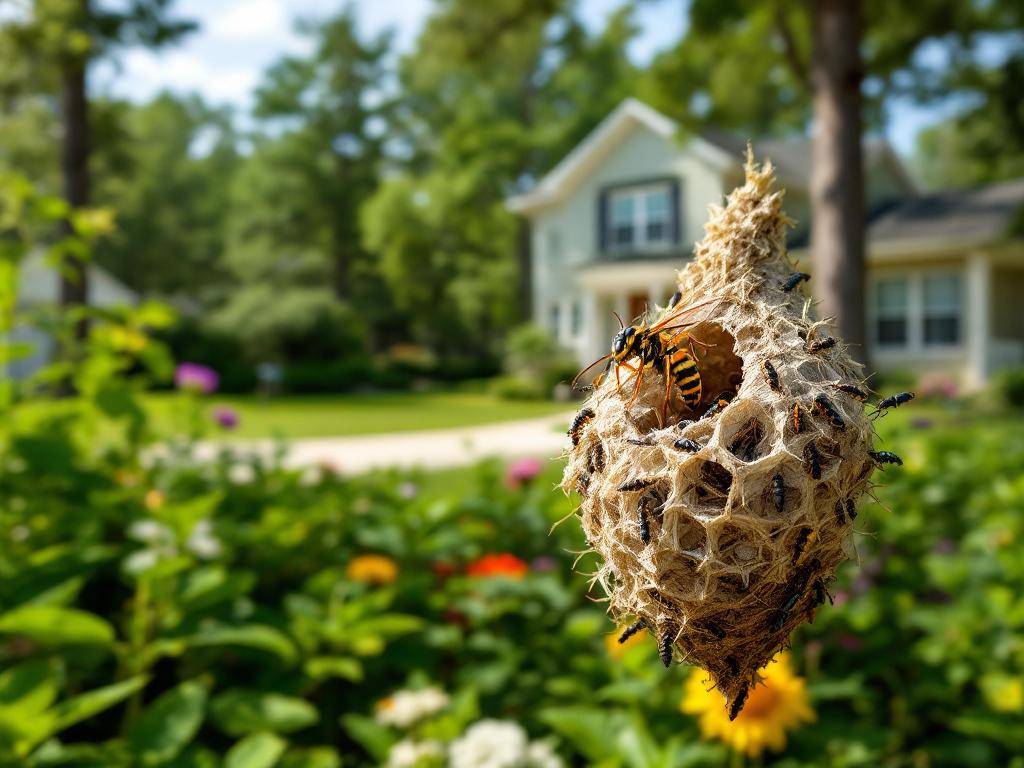
Image generated by flux-ai.io & content generated by ChatGPT Version 4o-mini
Discovering Florida’s Mason Wasps: Friends in Your Garden
Residents of Leon County, Florida, might not think much about wasps while enjoying the lush greenery around Tallahassee, but a recent scholarly article sheds light on an interesting group of wasps that could play an important role in our local ecosystem. These are the mason wasps, specifically those belonging to the genus Zethus. While these tiny creatures might not be the stars of nature documentaries, they are essential players in keeping our gardens healthy.
What Are Mason Wasps?
Mason wasps are part of a family known as Eumeninae, which includes potter wasps. Unlike potter wasps that build nests out of mud, mason wasps like Zethus use old insect burrows or plant materials to create their homes. Imagine finding a cozy, abandoned birdhouse in your backyard; that’s sort of how these wasps operate! They clean out old burrows, lay their eggs, and even stock their nests with caterpillars to feed their young once they hatch.
In Florida, there are two species of Zethus: Zethus slossonae, which is mostly found in southern Florida, and Zethus spinipes, which has a wider range throughout the southeastern United States. The Zethus slossonae is particularly striking with its black and red coloring, making it easy to distinguish from other wasps.
Why Should We Care?
Now, you might wonder why knowing about mason wasps is important, especially if you’re busy with work or school. The researchers behind this study point out that while we don’t know a lot about the specific behaviors of Zethus, they generally feed on caterpillars, many of which are considered pests. This means that these wasps could be natural pest controllers for gardens and farms in Leon County, helping to reduce the reliance on chemical pesticides.
Given that agriculture is a significant part of our local economy, with many farms producing fruits and vegetables, having natural pest control can help promote healthier produce for families and foster more sustainable farming practices. Reducing the use of pesticides not only benefits the environment but also protects beneficial insects and wildlife that contribute to the ecosystem.
A Local Connection
In Leon County, where many residents enjoy gardening or are involved in 4-H youth development programs, understanding the role of mason wasps can enhance our connection to the environment. If you’re planting a vegetable garden or managing a community garden, attracting beneficial insects like mason wasps can help keep your plants thriving naturally while minimizing negative impacts on the ecosystem.
Additionally, with a growing interest in sustainable agriculture and community food systems, knowing about these wasps can encourage more eco-friendly practices. Imagine teaching kids in 4-H about the importance of these little creatures, or spotting them on a nature walk around Lake Jackson!
What’s Next?
While the article highlights what we know about mason wasps, it also points out that much remains to be discovered about their biology and behavior. This means there’s a chance for local students and researchers to get involved in learning more about these fascinating insects.
In conclusion, the next time you see a wasp buzzing around your garden, take a moment to appreciate its role in the ecosystem. These mason wasps may be small, but they could be mighty allies in promoting healthy gardens and sustainable farming practices in Leon County. Let’s keep an eye out for them and support our local environment by welcoming beneficial wildlife into our yards!
References
EENY-402/IN725: Mason Wasps of Florida, Zethus spp. (Insecta: Hymenoptera: Vespidae: Eumeninae). (n.d.). Ask IFAS – Powered by EDIS. https://edis.ifas.ufl.edu/publication/IN725