
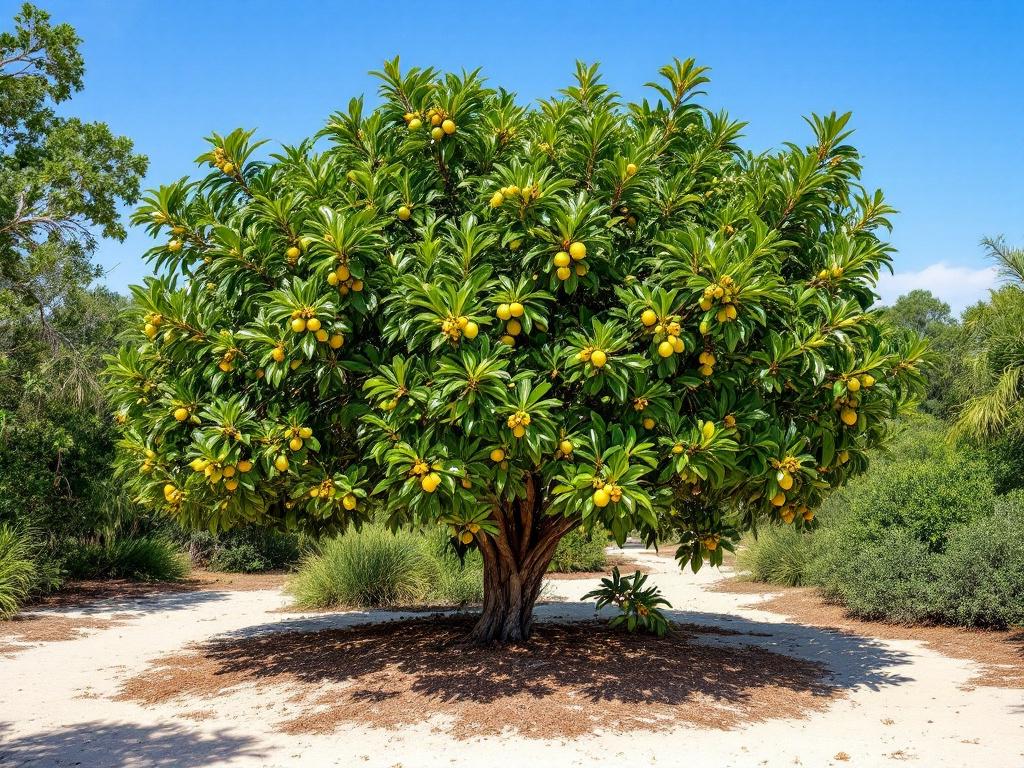
Image generated by flux-ai.io & content generated by ChatGPT Version 4o-mini
Beware the Carrotwood: An Invasive Tree to Avoid in Baker County
Baker County is known for its beautiful landscapes, agriculture, and friendly neighborhoods. However, there’s a newcomer that could pose a threat to our local environment: the Carrotwood tree, scientifically known as Cupaniopsis anacardioides. While it might seem like a charming addition to your yard or street, experts warn against planting it due to its invasive nature.
What is Carrotwood?
Carrotwood is a compact, evergreen tree that can grow between 25 to 35 feet tall, with glossy, dark green leaves. It produces small, lime-green flowers that aren’t particularly eye-catching, followed by round, green fruits that turn yellow-orange as they ripen. While it may look appealing, this tree has a reputation for being a “bad neighbor” in the plant world.
Originally from Australia, Carrotwood thrives in warm climates like ours here in Baker County. It can tolerate a variety of soil types and is resistant to drought, making it seem like an ideal choice for landscaping. However, its ability to spread quickly and dominate local ecosystems makes it a problem for our native plants and wildlife.
Why is it a Problem?
The Florida Department of Agriculture and Consumer Services lists Carrotwood as a prohibited plant due to its invasive characteristics. The seeds are easily spread by birds, allowing the tree to establish itself in local habitats, such as the nearby lush hammocks and forests. This can lead to a decrease in biodiversity, as native plants struggle to compete with the aggressive growth of Carrotwood.
In simpler terms, if you plant a Carrotwood tree in your yard, it might look nice at first, but it can quickly take over the area, pushing out local plants that provide essential food and habitat for our wildlife. This is particularly concerning for residents who care about maintaining the natural beauty and ecological health of Baker County.
What Should You Do?
If you’re considering adding some greenery to your home or yard, it’s best to steer clear of Carrotwood. Instead, opt for native trees and plants that require little, if any, supplemental water, fertilizer, or pesticides, and that welcome wildlife and pollinators. Trees like the Southern Live Oak or Red Maple are excellent alternatives that provide shade and habitat without the invasive risks.
Local gardening clubs and the University of Florida’s Institute of Food and Agricultural Sciences (UF/IFAS) offer resources and support for selecting the right plants for your landscape. Engaging with these resources can help you make informed decisions that benefit both your property and the environment.
Conclusion
In Baker County, where agriculture and natural beauty are part of our community identity, it’s essential to be mindful of the plants we introduce into our surroundings. While the Carrotwood tree may seem appealing, its invasive nature makes it a poor choice for landscaping. By choosing native plants, we can help preserve the rich biodiversity and charm of our local environment for generations to come. If you have questions about plants or gardening, don’t hesitate to reach out to local experts who can guide you in making the best choices for your yard and our community.
References
ENH380/ST221: Cupaniopsis anacardiopsis: Carrotwood. (n.d.). Ask IFAS – Powered by EDIS. https://edis.ifas.ufl.edu/publication/ST221