
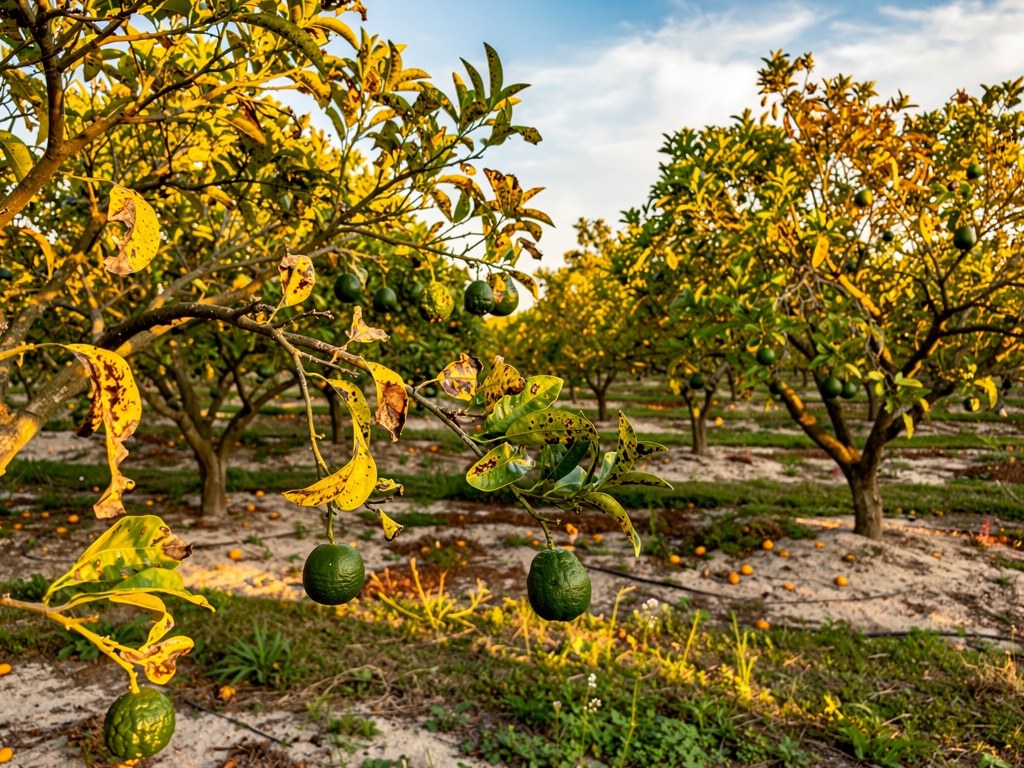
Image generated by flux-ai.io; content generated by ChatGPT 4o-mini.
Boosting Citrus Health: New Insights for Hardee County Farmers
Hardee County, with its rich agricultural heritage, is home to many citrus groves that have faced challenges due to a disease called Huanglongbing (HLB), also known as citrus greening. This disease, caused by bacteria that infect citrus trees, has been a significant concern for farmers, as it affects the trees’ health and fruit production. A recent study offers promising strategies to help citrus growers in our community manage HLB-affected trees more effectively.
The study, conducted by researchers Tripti Vashisth, Davie Kadyampakeni, and Jamie D. Burrow, highlights how tailored nutrition and irrigation management can improve the health and productivity of trees affected by HLB. The researchers emphasize that once a tree tests positive for the bacteria causing HLB, it’s unlikely to fully recover. However, with the right care, these trees can still produce fruit, which is crucial for farmers in Hardee, where citrus is a vital part of the local economy.
Customizing Care for Unique Groves
One of the study’s key findings is that there is no one-size-fits-all solution for citrus care. Each grove in Hardee County has its own unique characteristics, including soil type, water quality, and tree age. This means that farmers need to develop specific plans for their groves rather than relying on generic fertilizer or irrigation schedules.
For example, trees with a compromised root system—like those affected by HLB—require a different irrigation approach. Instead of infrequent, heavy watering, the researchers suggest more frequent, lighter watering. This helps ensure that the trees get the moisture they need without overwhelming their weakened roots. For farmers in Hardee, this could mean adjusting their irrigation systems to deliver water more often, which might be a shift from traditional practices.
Nutrient Management: A Year-Round Commitment
Another crucial aspect of the study is the importance of proper nutrition for HLB-affected trees. The researchers recommend that farmers focus on providing a continuous supply of nutrients throughout the year. This can involve both soil and foliar applications (spraying nutrients directly onto the leaves). However, it’s vital that farmers do not rely solely on leaf applications. Instead, soil nutrients should be applied in a way that aligns with the trees’ water uptake.
Regular soil testing is also emphasized. By checking the soil’s pH, which affects how well nutrients are absorbed, farmers can make necessary adjustments. The ideal pH range for citrus trees is between 5.8 and 6.5. If the soil pH is too high or too low, it can cause additional stress to the trees, making it harder for them to absorb nutrients.
Why This Matters for Hardee County
With about 920 farms in Hardee County, many of which are dedicated to citrus production, the findings from this study could significantly impact local farmers. The ability to implement customized irrigation and nutrition plans could enhance the resilience of citrus trees against HLB. This not only supports the agricultural economy but also helps maintain local jobs and livelihoods.
Additionally, as many residents are involved in 4-H and agricultural programs, understanding these practices can empower the next generation of farmers to adopt effective strategies for managing their groves. As they learn about the importance of nutrient management and irrigation, they can contribute to the sustainability and profitability of Hardee County’s citrus industry.
In summary, while HLB poses a serious threat to citrus production, this research provides hopeful strategies that can help local farmers keep their trees healthy and productive. By embracing these tailored approaches, Hardee County can continue its legacy as a vibrant agricultural community.
References
HS1367/HS1367: Nutrition and Irrigation Management for Florida HLB-Affected Trees. (n.d.). Ask IFAS – Powered by EDIS. https://edis.ifas.ufl.edu/publication/HS1367