
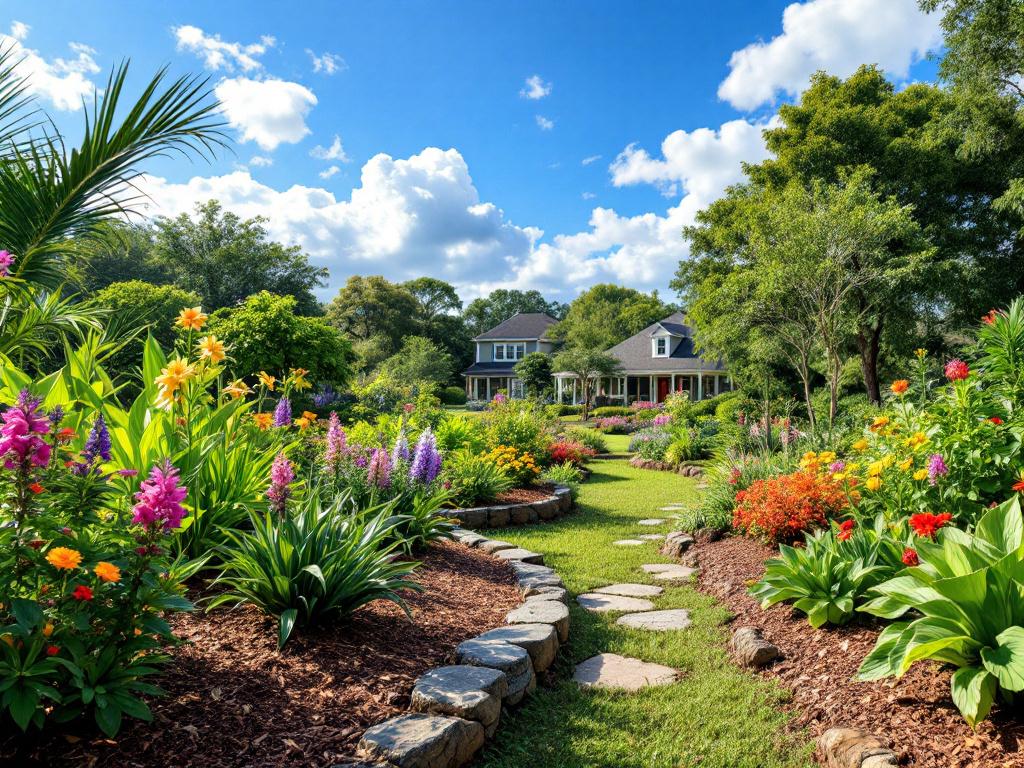
Image generated by flux-ai.io & content generated by ChatGPT Version 4o-mini
Transforming Gadsden Landscapes: How Sustainable Gardening Can Boost Your Home’s Value
Gadsden County, Florida, is known for its lush landscapes and commitment to agriculture. With nearly 490 farms in the area, many residents understand the importance of nurturing our natural resources. A recent study from the University of Florida highlights how adopting environmentally friendly landscaping practices can not only benefit our environment but also increase property values.
As urban areas continue to expand, it’s crucial for homeowners to rethink their landscaping choices. Traditional lawns, often dominated by turfgrass, require substantial amounts of water, fertilizers, and maintenance. This can lead to higher costs and potential pollution, especially with heavy rains that can wash excess fertilizers into local waterways. The study suggests that switching to more sustainable landscapes—those that use fewer resources, incorporate native plants, and follow the principle of right plant, right place—could be a win-win for homeowners and the environment alike.
What Did the Research Find?
The research surveyed 610 homeowners across Florida, asking them about their landscaping preferences and the value they associate with different types of yards. The findings were clear: a well-maintained landscape can significantly boost property values. In fact, almost 95% of participants believed that a good landscape could increase their home’s overall worth. Many estimated an increase of 6% to 10%, while some thought it could be as high as 20% or more!
Interestingly, homeowners perceived alternative landscaping options, which include less turfgrass and more native plants, as adding even more value compared to traditional lawns. For example, a yard with 50% turfgrass and 50% native plants was seen as more valuable than one with only grass. This aligns with the principle of selecting plants that thrive with minimal irrigation and maintenance.
The Role of Financial Incentives
A key takeaway from the study is the potential impact of economic incentives. Many homeowners expressed that rebates or tax credits would encourage them to make the switch to sustainable landscaping. In Gadsden, where many families are budget-conscious, financial incentives could make a big difference. The study showed that homeowners would be more likely to install environmentally friendly landscapes if they received a rebate of around 44% or a tax deduction of about 46%.
Communities like Alachua County have already implemented successful rebate programs, offering up to $2,000 for replacing traditional lawns with water-efficient options. Such programs could be beneficial for Gadsden residents, helping to promote sustainable gardening while also making it more affordable.
Why This Matters to Gadsden County
In Gadsden County, where agriculture plays a vital role in our economy, the adoption of sustainable landscaping practices can resonate deeply with our community values. Not only do these practices conserve water, but they also support local wildlife and reduce the use of harmful chemicals that can affect both our health and the environment. This aligns with the principle of water efficiency in landscaping, which emphasizes reducing water waste and pollution.
As we think about the future, sustainable landscaping could be a key player in enhancing our community’s beauty and property values. Imagine transforming your yard into a vibrant space with native plants that require less water and maintenance, all while increasing your home’s worth.
The opportunity to embrace these changes lies in our hands. By exploring potential financial incentives and considering the benefits of sustainable landscaping, we can create a greener, more valuable Gadsden County for everyone. Whether you’re a homeowner or a small farmer, it’s time to dig into the possibilities of sustainable gardening!
References
FE1120/FE1120: Using Economic Incentives to Encourage Sustainable Alternative Residential Landscaping Practices in Florida. (n.d.). Ask IFAS – Powered by EDIS. https://edis.ifas.ufl.edu/publication/FE1120