
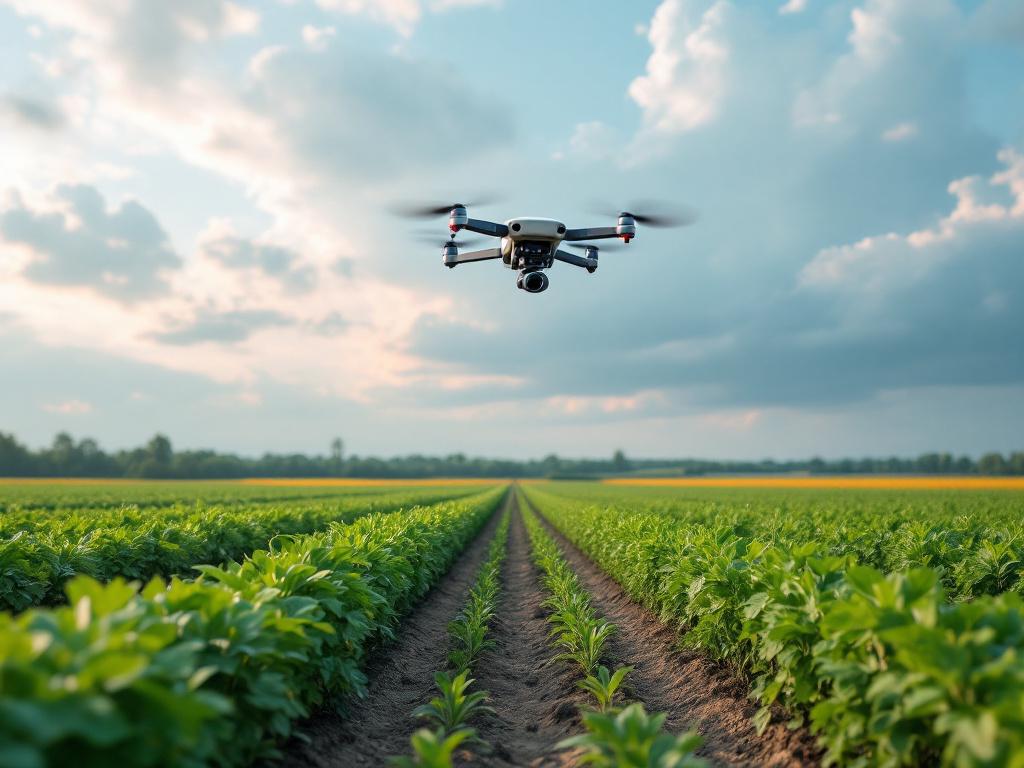
Image generated by flux-ai.io & content generated by ChatGPT Version 4o-mini
Drones in Agriculture: A New Tool for Jackson County Farmers
In recent years, unmanned aerial vehicles (UAVs), commonly known as drones, have become game-changers in agriculture. A recent study from Florida highlights how these flying machines can help farmers monitor their crops more efficiently and effectively, which is particularly relevant for those of us here in Jackson County, a region rich in agriculture.
What Are UAVs and How Do They Help?
Drones are small flying devices that can be equipped with cameras and sensors to gather information about crops. This technology allows farmers to collect data without walking through every field, saving them time and effort. For example, instead of manually checking for plant health or pest issues, farmers can use drones to create detailed maps of their fields. These maps can show everything from plant stress levels to areas that may need more water.
Imagine being able to see your cotton or peanut fields from above and identify which parts are thriving and which are struggling—all without stepping out into the heat. This is the promise of UAV technology.
How Does It Work?
According to the study, the process starts with planning the drone’s flight path using mission planning apps. Farmers can set parameters like flight height and speed to ensure the drone collects the right data. Once the drone is in the air, it captures high-resolution images and information about the crops, which can later be analyzed to create maps showing things like plant health (known as NDVI maps) or even 3D terrain models.
For a local farmer in Jackson County, this means better decision-making. If a farmer notices that a section of cotton is showing signs of stress, they can quickly address the issue before it affects their harvest.
Benefits for Jackson County Farmers
Jackson County is home to many farms that grow cotton, peanuts, and other crops. With agriculture being a significant part of our local economy, innovations like UAVs can help farmers increase their productivity and profits. Here are a few advantages that this technology offers:
-
Efficiency: Drones can cover large areas in a fraction of the time it would take to scout fields on foot. This is especially beneficial during busy growing seasons when farmers are stretched thin.
-
Cost-Effective: While some drones and their associated software come with a cost, they can save farmers money in the long run by improving crop yields and reducing the need for manual labor.
-
Precision Agriculture: By using data collected from UAVs, farmers can apply water, fertilizers, and pesticides more precisely, reducing waste and environmental impact. This is crucial in a region like ours, where water conservation is becoming increasingly important.
-
Real-Time Data: Drones provide real-time information that helps farmers make quick decisions. For instance, if a pest outbreak is detected, they can act immediately, potentially saving their crops.
Looking Ahead
As technology continues to evolve, the integration of UAVs in agriculture is likely to expand. Farmers in Jackson County who embrace these tools can not only enhance their crop management practices but also contribute to a more sustainable agricultural future.
In a time when many local farmers face challenges from climate change and market fluctuations, innovations like drone technology offer a glimmer of hope. They can help ensure that Jackson County remains a vital player in Florida’s agricultural landscape, providing fresh produce to our community and beyond.
So, whether you’re a farmer or a consumer, keep an eye on the skies—drones may soon be a common sight over our fields, helping to cultivate a more prosperous future for Jackson County.
References
AE535/AE535: Preflight and Flight Instructions on the Use of Unmanned Aerial Vehicles (UAVs) for Agricultural Applications. (n.d.). Ask IFAS – Powered by EDIS. https://edis.ifas.ufl.edu/publication/AE535