
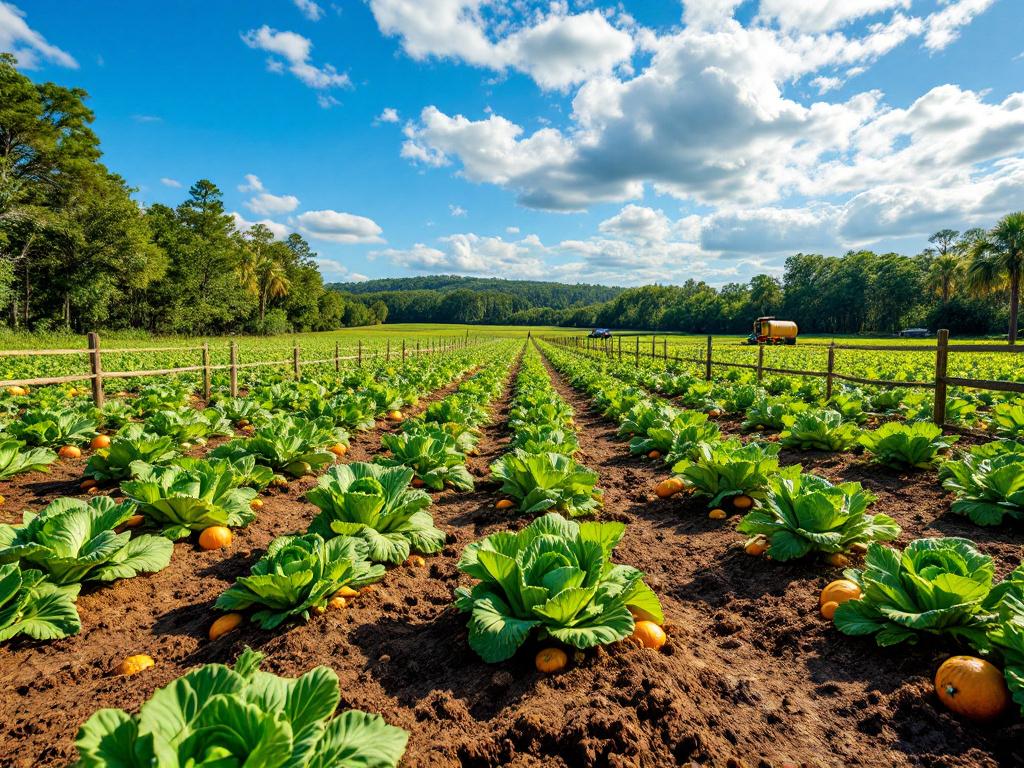
Image generated by flux-ai.io & content generated by ChatGPT Version 4o-mini
Turning Waste Into Wealth: How Cull Vegetables Can Benefit Gulf County’s Beef Cattle Industry
In Gulf County, Florida, where agriculture is a key part of our economy, a recent study highlights an innovative way for local beef cattle producers to save money while reducing food waste. Researchers have explored using “cull vegetables”—those imperfect or surplus vegetables that don’t make it to grocery store shelves—as a nutritious feed for cattle. This approach not only helps ranchers cut costs but also contributes to sustainability in the farming community and promotes local agricultural practices.
What are Cull Vegetables?
Cull vegetables are those that are too small, oddly shaped, or blemished to be sold as fresh produce. Instead of letting these vegetables go to waste, they can be repurposed as feed for livestock, particularly beef cattle. For farmers in Gulf County, where beef cattle production plays a significant role in agriculture, this could be a game changer that enhances local food systems.
The Benefits and Drawbacks
Using cull vegetables can provide a cost-effective source of nutrients for beef cattle. Many of these vegetables, like cabbage and pumpkins, have a high content of digestible fiber and carbohydrates, which can be beneficial for cattle’s diets. However, there are some important considerations.
Researchers noted that cull vegetables typically have high water content. This means cattle would need to eat large amounts to get the necessary nutrients, potentially crowding out other more nutrient-dense feeds. For example, a 1,000-pound cow can consume about 53 pounds of fresh cabbage a day, but this could limit her intake of other essential feed types.
Additionally, the nutrient content of cull vegetables can vary significantly based on factors like growing conditions, which could lead to nutritional imbalances if not monitored carefully. For local ranchers, understanding these factors is crucial to ensuring their cattle receive balanced nutrition.
Storage and Handling Challenges
Another challenge is the storage of these vegetables. Due to their high moisture content, cull vegetables spoil quickly, especially in our warm and humid Florida climate. If not managed properly, spoilage can lead to significant losses. However, researchers suggest mixing cull vegetables with dry hay to help improve their storage life and nutritional value, aligning with best practices in local agriculture.
Why This Matters for Gulf County
For Gulf County, where nearly 83% of agricultural production comes from livestock, finding innovative and cost-effective feeding solutions is essential. By incorporating cull vegetables into their feeding practices, local ranchers can potentially lower their feed costs and enhance their sustainability efforts, contributing to the local economy.
Moreover, as our community faces economic challenges, such as a poverty rate of 14.9% and a declining population, these practices can promote economic resilience. By optimizing the use of locally sourced resources, Gulf County can strengthen its agricultural base, ensuring that local ranchers remain competitive and sustainable while fostering community connections.
Conclusion
The use of cull vegetables as cattle feed offers a promising avenue for beef producers in Gulf County. It’s a practical way to make use of surplus food while supporting the local economy and reducing waste. As ranchers consider this option, they will need to stay informed about the nutritional content and storage methods to ensure their livestock receive the best care possible. With careful planning, this strategy could lead to healthier cattle and a more sustainable future for Gulf County’s agricultural community, reinforcing the importance of local food systems.
References
AN280/AN280: Utilization of Cull Vegetables as Feedstuffs for Cattle. (n.d.). Ask IFAS – Powered by EDIS. https://edis.ifas.ufl.edu/publication/AN280